class: center, middle, inverse, title-slide .title[ # The mathematical shape of plants ] .subtitle[ ## Topological Data Analysis and plant science ] .author[ ### Erik Amézquita<br>—<br>Division of Plant Science & Technology<br>Department of Mathematics<br>University of Missouri<br>— ] .date[ ### 2025-11-24 ] --- background-image: url("../../demat/figs/fam9_3.png") background-size: 100px background-position: 98% 2% # About me: From MX to MI to MO at MU ## I work across multiple disciplines and countries .left-column[ 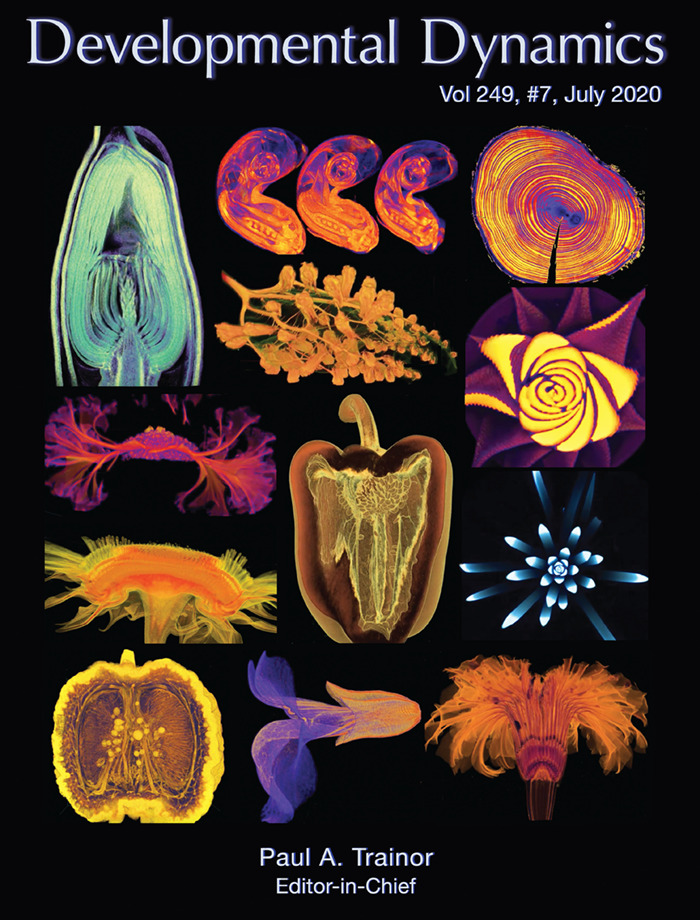 ] .right-column[ - 2013 - 2018 : Licenciatura (Bachelor): Mathematics @ Universidad de Guanajuato and CIMAT. - 2018 - 2023 : PhD: Computational Mathematics, Science & Engineering @ Michigan State University - 2023 - 2025 : ~~PFFFD~~ ~~PFFIE~~ PFF Postdoctoral Fellow: Plant Science / Mathematics @ University of Missouri (MU). - 2025 - present: Assistant Professor: Plant Science / Math @ MU. ] --- background-image: url("../../demat/figs/ecg_results.png") background-size: 700px background-position: 50% 80% # College → TDA ⊕ Archaeology Topological Data Analysis for pre-Columbian mask classification -- .pull-left[ <img src="../../demat/figs/barrett_poster-1.jpg" width="310" style="display: block; margin: auto;" /> ] -- .pull-right[  ``` r *- Lessons learned for better * future interdisciplinary * collaborations *- Always include the other * discipline experts at * every stage of the analysis *- Learn the basics of other * people disciplines ``` ] --- # TDA ⊕ Archaeology: retold .pull-left[ 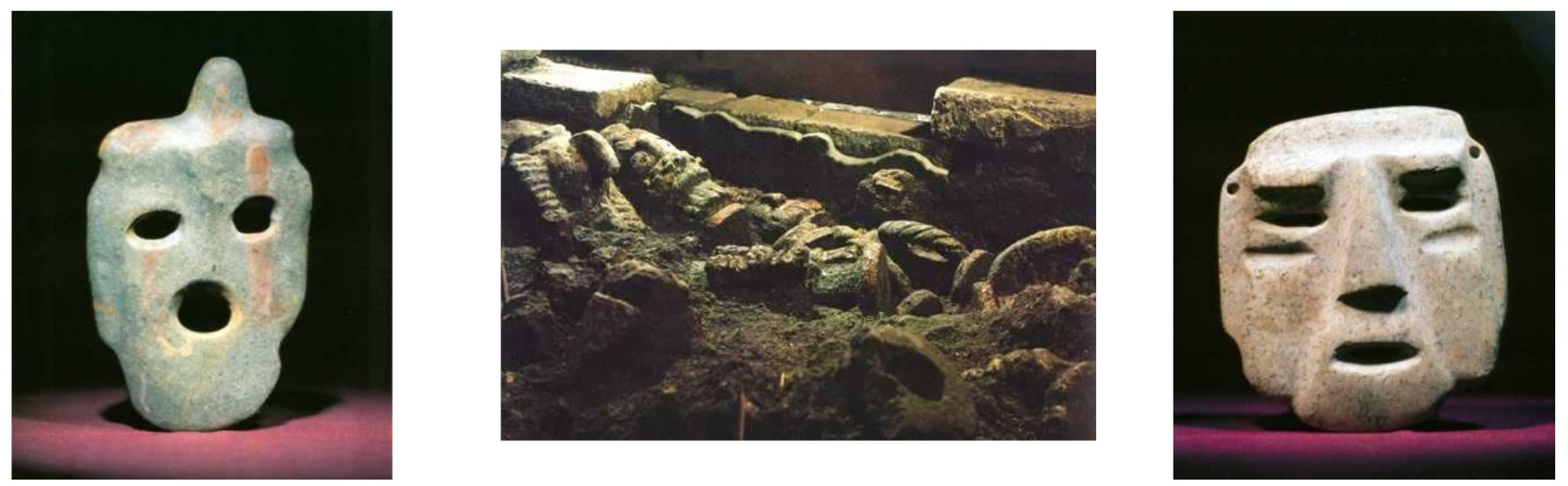 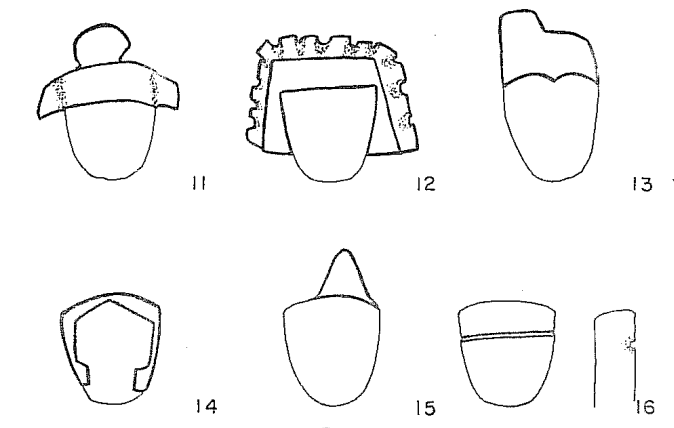 <p style="font-size: 10px; text-align: center; color: Grey;">Credits: <a href="http://mediateca.inah.gob.mx/repositorio/islandora/object/tesis%3A4497">Olmedo Vera and González (1986)</a></p> ] .pull-right[ 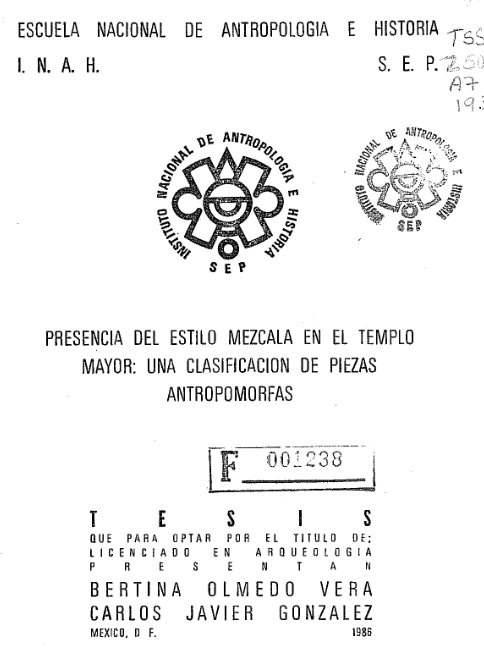 ] --- class: inverse, center, middle # A mathematician by training, a data scientist by trade, and a plant biologist by ~~collaboration~~ osmosis <img src="../../biology/figs/osmosis-in-plant-cell.png" width="400" style="display: block; margin: auto;" /> --- background-image: url("../../arabidopsis/figs/PFig1.png") background-size: 900px background-position: 50% 70% # Shape quantification ⊕ Plant Science - Quantifying the intuition - Intuifying the quantities --- # Come for the math, stay for the plants <div class="row" style="font-family: 'Yanone Kaffeesatz'; font-size:22px;"> <div class="column" style="max-width:33%"> <p style="line-height:0;text-align: center; font-size:28px">The shape of adaptability</p> <img style="padding: 0 70px;" src="../../barley/figs/S017_L3_1.gif"></img> <img style="padding: 0 55px;" src="../../barley/figs/ecc_X.gif"></img> <p style="text-align: center;">Topological Data Analysis</p> <p style="text-align: center;">Euler Characteristic Transform</p> </div> <div class="column" style="max-width:33%"> <p style="line-height:0;font-size:28px;text-align: center;">The shape of development</p> <img style="padding: 0 60px;" src="../../citrus/figs/SR01_L01_black_exocarp.gif"></img> <img style="padding: 0 27px;" src="../../citrus/figs/SW03_CRC1241-B_12B-4-3_L00_lambproj_v.jpg"></img> <p style="text-align: center;">Ellipsoidal modeling</p> <p style="text-align: center;">Directional statistics</p> </div> <div class="column" style="max-width:33%"> <p style="line-height:0;font-size:28px;text-align: center;">The shape of domestication</p> <img style="padding: 0 35px;" src="../../walnuts/figs/2014SBa_R5_T81_meat_2.gif"></img> <img style="padding: 0 10px;" src="../../walnuts/figs/kernel_volume_vs_nut_volume.png"></img> <p style="text-align: center;">Allometry of multiple tissues</p> <p style="text-align: center;">Convexity indices</p> </div> </div> --- # Phenotyping the shape of things to come <div class="row" style="font-family: 'Yanone Kaffeesatz'; font-size:22px;"> <div class="column" style="max-width:33%"> <p style="line-height:0;text-align: center; font-size:28px">Phenotyping patterns</p> <img style="padding: 0 30px;" src="../../mcarto/figs/molecular_cartography_2x2.jpg"></img> <img style="padding: 0 30px;" src="../../mcarto/figs/persistence_images_1x1.svg"></img> <p style="text-align: center;">mRNA sub-cellular localization in soybean nodule cells.</p> </div> <div class="column" style="max-width:33%"> <p style="line-height:0;font-size:28px;text-align: center;">Phenotyping movement</p> <img style="padding: 0 10px;" src="../../cuscuta/figs/qmlphv.gif"></img> <img style="padding: 35px 30px;" src="../../cuscuta/figs/avg_pl.svg"></img> <p style="text-align: center;">Tracking and describing <i>Cuscuta campestris</i> circumnutation</p> </div> <div class="column" style="max-width:33%"> <p style="line-height:0;font-size:28px;text-align: center;">Phenotyping data</p> <img style="padding: 0 0px;" src="../../nasrin/figs/fpkm_raw_3.png"></img> <img style="padding: 30px 0px;" src="../../nasrin/figs/lung_fpkm_meancorr_eps1.0e+06_r40_g40.png"></img> <p style="text-align: center;">Reducing <strong>and</strong> clustering high-dimensional omics data</p> </div> </div> --- class: inverse, middle, center # The culture shock of switching disciplines has been greater than that of switching countries <img src="../../img/homotopy_botany.png" width="500" style="display: block; margin: auto;" /> # But it is fun --- background-image: url("../../barley/figs/seed.png") background-size: 325px background-position: 99% 99% class: middle # Roadmap for today 1. Phenotyping shapes: barley seeds - Euler Characteristic Transform 1. Phenotyping patterns: mRNA localization in soybean - Sublevel set persistence - Persistence Images 1. Phenotyping data: lung tissue RNAseq - Mapper 1. Current plant data and TDA opportunities --- class: inverse, middle, center # Phenotyping shapes ## How _shape-y_ is a shape? <img src="../../barley/figs/amezquita_etal_2021.png" width="500" style="display: block; margin: auto;" /> --- background-image: url("https://ars.els-cdn.com/content/image/1-s2.0-S1369526620300339-fx1_lrg.jpg") background-size: 1100px background-position: 50% 40% # A crash course in plant breeding <br> <br> <br> <br> <br> <br> <br> <br> <br> <br> <br> <br> <br> <br> <br> <br> <br> <br> <p style="font-size: 10px; text-align: center; color: Grey;">Image Credits: <a href="https://doi.org/10.1016/j.pbi.2020.03.003">Turner-Hissong <em>et al.</em> (2020)</a></p> - Genetics are **hard**: Looking for a needle in a haystacks: lots of genes - E.g. [barley](https://doi.org/10.1105/tpc.110.082537) (32k), [rice](https://doi.org/10.1093/aob/mcf218) (45k), [maize](https://doi.org/10.1104/pp.105.068718) (50k) ⊕ transposons, polyploidy, oh my - Use shape (phenotype) to direct the search --- class: inverse <div class="row"> <div class="column" style="max-width:44%"> <a href="https://cereal.interreg-npa.eu/subsites/CEREAL/Barley_cultivation-Norway_Presentation_2018.pdf" target="_blank"><img style="padding: 0 0 0 0;" src="../../barley/figs/barley_norway.jpg"></a> <a href="https://www.resilience.org/stories/2020-03-09/the-last-crop-before-the-desert/" target="_blank"><img style="padding: 0 0 0 0;" src="../../barley/figs/barley_morocco.jpg"></a> <a href="https://www.doi.org/10.1007/978-1-4419-0465-2_2168" target="_blank"><img style="padding: 0 0 0 0;" src="../../barley/figs/barley_world.jpg"></a> </div> <div class="column" style="max-width:44%"> <a href="https://www.bloomberg.com/news/articles/2020-09-13/iraq-to-offer-first-ever-barley-exports-as-rains-yield-surplus" target="_blank"><img style="padding: 0 0 0 0;" src="../../barley/figs/barley_iraq.jpg"></a> <a href="https://www.tibettravel.org/tibetan-culture/highland-barley.html" target="_blank"><img style="padding: 0 0 0 0;" src="../../barley/figs/barley_seed_tibet.jpg"></a> <div class="row"> <div class="column" style="max-width:46%"> <img src="../../barley/figs/S019_L0_1.gif"> </div> <div class="column" style="max-width:55%"> <img src="../../barley/figs/S017_L0_seed_10_0.gif"> </div> </div> </div> <div class="column" style="max-width:8%; font-size: 15px;"> <p style="text-align: center; font-size: 30px; line-height: 1em;"> <strong> Barley from across the world </strong></p> <p>28 collected barley varieties</p> <p>Brought to California in 1929</p> <p>Artificial evolution experiment for 58 generations</p> <p>975 panicles scanned</p> <p>38,000 seeds isolated</p> </div> </div> --- ## The Euler Characteristic Curve (ECC) <img src="../../barley/figs/ecc_ver2.gif" width="650" style="display: block; margin: auto;" /> ## The Euler Characteristic Transform (ECT) <img src="../../barley/figs/ect_000.png" width="650" style="display: block; margin: auto;" /> --- ## The Euler Characteristic Curve (ECC) <img src="../../barley/figs/ecc_Z_32.png" width="650" style="display: block; margin: auto;" /> ## The Euler Characteristic Transform (ECT) <img src="../../barley/figs/ect_ver2.gif" width="650" style="display: block; margin: auto;" /> --- # Quantify the shape of barley **Goal:** Classify the **28** founding barley varieties solely by grain morphology information. <style type="text/css"> .tg {border-collapse:collapse;border-color:#93a1a1;border-spacing:0;margin:0px auto;} .tg td{background-color:#fdf6e3;border-bottom-width:1px;border-color:#93a1a1;border-style:solid;border-top-width:1px; border-width:0px;color:#002b36;font-family:Arial, sans-serif;font-size:14px;overflow:hidden;padding:10px 5px; word-break:normal;} .tg th{background-color:#657b83;border-bottom-width:1px;border-color:#93a1a1;border-style:solid;border-top-width:1px; border-width:0px;color:#fdf6e3;font-family:Arial, sans-serif;font-size:14px;font-weight:normal;overflow:hidden; padding:10px 5px;word-break:normal;} .tg .tg-2bhk{background-color:#eee8d5;border-color:inherit;text-align:left;vertical-align:top} .tg .tg-0pky{border-color:inherit;text-align:left;vertical-align:top} .tg .tg-gyvr{background-color:#eee8d5;border-color:inherit;font-size:100%;text-align:left;vertical-align:top} </style> <table class="tg"> <thead> <tr> <th class="tg-0pky">Shape descriptors</th> <th class="tg-0pky">No. of descriptors</th> <th class="tg-0pky">F1</th> </tr> </thead> <tbody> <tr> <td class="tg-2bhk">Traditional</td> <td class="tg-2bhk">11</td> <td class="tg-2bhk">0.55 ± 0.019</td> </tr> <tr> <td class="tg-0pky">Topological</td> <td class="tg-0pky">12</td> <td class="tg-0pky">0.74 ± 0.016</td> </tr> <tr> <td class="tg-2bhk">Combined</td> <td class="tg-2bhk">23</td> <td class="tg-2bhk"><strong>0.86 ± 0.010</strong></td> </tr> </tbody> </table> ### What does topology actually measure? .pull-left[ <img src="../../barley/figs/discerning_directions.png" width="225" style="display: block; margin: auto;" /> ] .pull-right[  ] --- # Into semi-supervised territory - Train an SVM with 100% of the founders `\((F_0)\)` - Classify the progeny `\(F_{58}\)`: DNA (genotype) ↔ shape (phenotype) enrichment .pull-left[  ] .pull-right[  ] --- background-image: url("../figs/amezquita_etal_2021.png") background-size: 300px background-position: 98% 2% # Summary .left-column[ <img src="../../barley/figs/S017_L3_1.gif" width="150" style="display: block; margin: auto;" /><img src="../../barley/figs/ecc_X.gif" width="150" style="display: block; margin: auto;" /> ] .right-column[ - **TDA** captures **nuanced** morphological information that is not obvious to the naked eye. - We get the best results by **combining** both traditional and topological morphological descriptors. - We can tell **similar** population genetic dynamics by using combined **morphological** descriptors. - Seed phenotyping can be **cheaper** than genotyping. ] --- # Color me rooted and phenotyped! .pull-left[   Persistent intensity peak color ] .pull-right[   Soybean root phenotyping across years ] --- class: inverse, middle, center # Phenotyping patterns ## How *pattern-y* is a pattern? (w/ Sutton Tennant, Sandra Thibivillers, Sai Subhash, Benjamin Smith, Samik Bhattacharya, Jasper Kläver, Marc Libault ) --- # The Central Dogma and Gene Expression .pull-left[  <p style="font-size: 10px; text-align: right; color: Grey;">Credits: <a href="https://doi.org/10.1242/bio.017178">Xu <em>et al.</em> (2016)</a></p> ] .pull-right[ - Every cell in an organism has the same* DNA. - But cells will only express a subset of genes depending on their type. - By knowing which genes are over/under-expressed, we can gather what makes each cell type unique and what are their exact functions.  ] --- # mRNA localization at a sub-cellular level - Beyond gene expression counts: Spatial segregation and asymmetrical distribution of mRNA across the cytosol in the soybean nodule. - Molecular Cartography™ data provided by the Libault Lab .pull-left[  Infected soybean nodule cells. Glyma.05G092200 in green. Glyma.05G216000 in red. ] .pull-right[ **Goals**: "How patterny is a pattern?" - Quantify the spatial patterns followed by mRNA within individual cells. - Mathematically model all observed mRNA sub-cellular distributions. - *Use this mathematical model to differentiate cell types and genotypes.* **Challenge** - Develop a mathematical model that works for any cell size, orientation, shape, and dimension. ] --- # Same expression levels, different patterns  **Subcellular transcript patterns ↔ spatial location of the cell within the nodule** --- # How *pattern-y* is a pattern?  Patterns are subject to a large variety of cell shapes, sizes, orientations, and mRNA quantities. - 97 genes (including 10 bacterial ones) → 6 genes - 2938 cells → 918 infected ones. --- background-image: url("../../mcarto/figs/GLYMA_05G092200_TDA_c00541_transp.gif") background-size: 800px background-position: 50% 85% # KDEs ⊕ Sublevel sets ⊕ Pers. images --- # Focus on `\(H_1\)` and `\(H_2\)` <img src="../../mcarto/figs/molecular_cartography_2x4.png" width="500" style="display: block; margin: auto;" /> <img src="../../mcarto/figs/persistence_images_2x4.png" width="600" style="display: block; margin: auto;" /> --- background-image: url("../../mcarto/figs/bw25_scale32_-_PI_1_1_1_H1+2_cell_sample.png") background-size: 620px background-position: 75% 99% # PCA on all topological descriptors <img src="../../mcarto/figs/bw25_both_scale16_-_PI_1_1_1_pca_H1+2_gridded.png" width="350" style="display: block; margin: auto auto auto 0;" /> --- background-image: url("../../mcarto/figs/bw25_scale32_-_PI_1_1_1_H1+2_kde_sample.png") background-size: 620px background-position: 99% 50% .left-column[ # PC 1 - Related to the number of distinct hotspots - Correlated to transcript number and cell size # PC 2 - Related to the heterogeneity of hotspots - Correlated to transcript density ] --- # Connecting PC 02 to the biological context  - Senescent cells exhibit a distinct transcriptomic spatial pattern compared to the rest of population. - Loss of mRNA localization may be a lesser known contributor to cell senescence. --- # We define a morphospace of transcriptomic patterns  # We then work "backward" --- class: bottom background-image: url("../../mcarto/figs/scale32_-_PI_1_1_1_H1+2_synthetic_30_clusters.jpg") background-size: 900px background-position: 50% 1% <img src="../../mcarto/figs/scale32_-_PI_1_1_1_H1+2_synthetic_pca_30_clusters.jpg" width="600" style="display: block; margin: auto;" /> --- class: bottom background-image: url("../../mcarto/figs/scale32_-_PI_1_1_1_H1+2_synthetic_varclusters.jpg") background-size: 900px background-position: 50% 1% <img src="../../mcarto/figs/scale32_-_PI_1_1_1_H1+2_synthetic_pca_varclusters.jpg" width="600" style="display: block; margin: auto;" /> --- # Summary **Biologically speaking** - Senescent cells exhibit a distinct transcriptomic spatial pattern compared to the rest of population. - Loss of mRNA localization may be a lesser known contributor to cell senescence. - *How does the morphospace of patterns change if we take into account more genes, more cell types, more tissues, and more mutants?* **Mathematically speaking** - Topological Data Analysis offers a robust way to encode the shape of patterns. - Robust to differences in scale, underlying boundaries, or orientation. - The framework is open to any number of cells, genes, and dimensions. <img src="../../mcarto/figs/D2_GLYMA_05G092200_z_kde_pd_suplevel_by_both_00512.jpg" width="550" style="display: block; margin: auto;" /> --- # Gerrymandering tears and battlefields .pull-left[ <img src="../../tda/figs/025-imperial.png" width="220" style="display: block; margin: auto;" /><img src="../../tda/figs/107-tulare.png" width="220" style="display: block; margin: auto;" /><img src="../../psd/figs/pavement_plasma.jpg" width="220" style="display: block; margin: auto;" /> Voting districts ≈ pavement cells. ] .pull-right[   Spatial transcriptomics of a battlefield ] --- class: inverse, middle, center # Phenotyping data ## The shape of omics data and molecular biology <img src="../../nasrin/figs/amezquita_etal_2023.png" width="750" style="display: block; margin: auto;" /> --- # The Central Dogma and Gene Expression .pull-left[  <p style="font-size: 10px; text-align: right; color: Grey;">Credits: <a href="https://doi.org/10.1242/bio.017178">Xu <em>et al.</em> (2016)</a></p> ] .pull-right[ - Every cell in an organism has the same* DNA. - But cells will only express a subset of genes depending on their type. - By knowing which genes are over/under-expressed, we can gather what makes each cell type unique and what are their exact functions.  ] --- background-image: url("../../nasrin/figs/mapper_vs_tsne_half.png") background-size: 450px background-position: 10% 90% # Problem: Data is very high-dimensional - FPKM counts of RNAseq data from human lung tissue → 19,648 genes - 314 healthy samples (GTEx) - 500 cancerous samples (TCGA) - tSNE (or UMAP) separates healthy vs cancerous samples (blue vs red) .pull-right[ **Question**: "Is the RNAseq data arranged into a specific shape?" - Are there subgroups that we are ignoring? - Can we go from clusters to continua? - What is the biological characterization of such continua? ] --- background-image: url("../../tda/figs/mapper_b_00.svg") background-size: 725px background-position: 50% 95% # Mapper ## Topological summary: exploration and visualization - We start with **lots** of data points in a **high-dimensional** space. - We want just a **handful** of points in a **low-dimensional** space that roughly preserve the original **shape**. --- background-image: url("../../tda/figs/mapper_c_complete.svg") background-size: 525px background-position: 50% 99% # Mapper in a single picture --- # Mapper and lung cancer data .pull-left[   ] .pull-right[ - Mapper produced mostly strand-like graphs regardless of parameters used - Healthy subjects tend to stay at the center - Cancerous samples are distributed at both ends - Healthy subjects that land in between might be at risk - **Predictive model**: Take a new patient sample and you can assess its cancer risk based on where they land in this continuum. ] --- # Biological significance  --- # Summary .pull-left[ - Data visualization to inspire new research. - Mapper finds novel sub-clusters that reveal important nuances. - Agnostic to any kind of -omics data - Mapper remains underused and there is plenty of untapped potential in plant genomics  ] .pull-right[   ] --- background-image: url("../../nasrin/figs/rice_mapper_2025-11-20.png") background-size: 905px background-position: 50% 90% # Leading the Resistance with mapper - RNASeq data from rice samples: control and bacterial infection - Look for differentially expressed genes to understand disease resistance --- background-image: url("../../tutorials/figs/knehansIPG.jpg") background-size: 470px background-position: 0% 85% # Since we're talking about networks .pull-right[ **Studying the people that study plants** - Academic social network analysis inspired by the IPG (Interdisciplinary Plant Group) at the University of Missouri - Expanded data collection for all 51 land-grant institutions - Weighted graph: - Plant faculty: nodes - No. of papers together: edge - Does collaboration/interdisciplinarity lead to better academic outcomes? - How to quantify collaboration/interdisciplinarity? W/ Roberto Herrera, Sophia Knehans, David Braun ] --- background-image: url("https://plantsandpython.github.io/PlantsAndPython/_images/plants_python_logo.jpg") background-size: 180px background-position: 99% 1% class: inverse, center, middle # Shaping the next generation of interdisciplinary scientists ## Large amounts of data require large amounts of people (Ask me later about my undergrad course on Data Science to Life Sciences) --- ## Pers. Diagrams ⊕ distances ⊕ MDS ⊕ PCA <p align="center"> <iframe width="800" height="550" src="../../tutorials/slides/tda_distances_pca_pipeline.html" title="Day10"> </iframe> </p> --- ## Mapper without the need to code <p align="center"> <iframe width="800" height="550" src="../../tutorials/slides/inital_mapper_pipeline.html" title="Day10"> </iframe> </p> --- background-image: url("https://upload.wikimedia.org/wikipedia/commons/4/4a/University_of_Missouri_logo.svg") background-size: 60px background-position: 99% 1% class: inverse ## Thank you! .pull-left[ **Barley seeds ⊕ ECT** - Liz Munch - Dan Chitwood - Michelle Quigley - Tim Ophelders - Jacob Landis - Dan Koenig **mRNA sub-cellular localization** - Sutton Tennant - Sandra Thibivillers - Sai Subhash - Benjamin Smith - Samik Bhattacharya - Jasper Kläver - Marc Libault **Mapper for lung cancer** - Farzana Nasrain - Katie Storey - Masato Yoshizawa ] .pull-right[ **Collaboration of the IPG network** - Ethan Lenhardt - Sophia Knehans - Roberto Herrera - David Braun **Other ongoing TDA projects** - Laura Martins - Mather Khan - David Mendoza-Cozatl - Jie Zhu - Felix Fritschi - Jose Costa Netto - Tim Duff - Olivia Fisk - Gloria Asare - Ajay Gupta - Bing Yang - Tyler Mitts - Colin Nichols **More details** <p style="font-size: 20px; text-align: center; color: Blue;">ejamezquita.github.io/</p> <p style="font-size: 20px; text-align: center; color: Blue;">eah4d@missouri.edu</p> ]